If you are looking for a custom leather wallet manufacturer, the real goal is not just to find a factory that can stitch leather. You need a partner that can turn your brand idea into a wallet line with the right materials, construction, logo finish, conditionnement, contrôle de qualité, and delivery rhythm.
For private label brands, wallets are a smart product category: they are compact, giftable, easy to ship, and suitable for both entry-level leather collections and premium accessories. The challenge is that small details matter. A wallet that looks good in a sample photo can still fail if the edge paint cracks, the card slots are too tight, or the leather thickness makes the fold bulky.
This guide explains how to choose an OEM leather wallet factory, what to prepare before sampling, which materials and logo methods to compare, and how to keep production consistent from the first prototype to bulk delivery.
What a Custom Leather Wallet Manufacturer Actually Does
A professional custom leather wallet manufacturer does more than cut and sew. The manufacturer should help translate your design brief into a production-ready specification. That includes pattern development, sélection de cuir, lining choice, card-slot structure, finition des bords, emplacement du logo, sélection du matériel, conditionnement, et inspection finale.
For brands, this matters because wallet manufacturing is detail-heavy. A handbag may have a larger visual silhouette, but a wallet has tighter tolerances. One millimeter can affect how cards slide in, how the bifold closes, and whether the finished piece feels premium in the hand.
If your brand already sells leather bags, adding wallets can also strengthen your product ecosystem. Customers often buy wallets as matching accessories, gift items, or lower-price entry products before purchasing a larger bag. You can connect wallet development with your broader OEM strategy, especially if you already work with a fabricant de sacs en cuir sur mesure.
Popular Wallet Types for Private Label Brands
Before asking for a quotation, define the wallet type clearly. Different structures require different patterns, leather thicknesses, labor time, and quality checks.
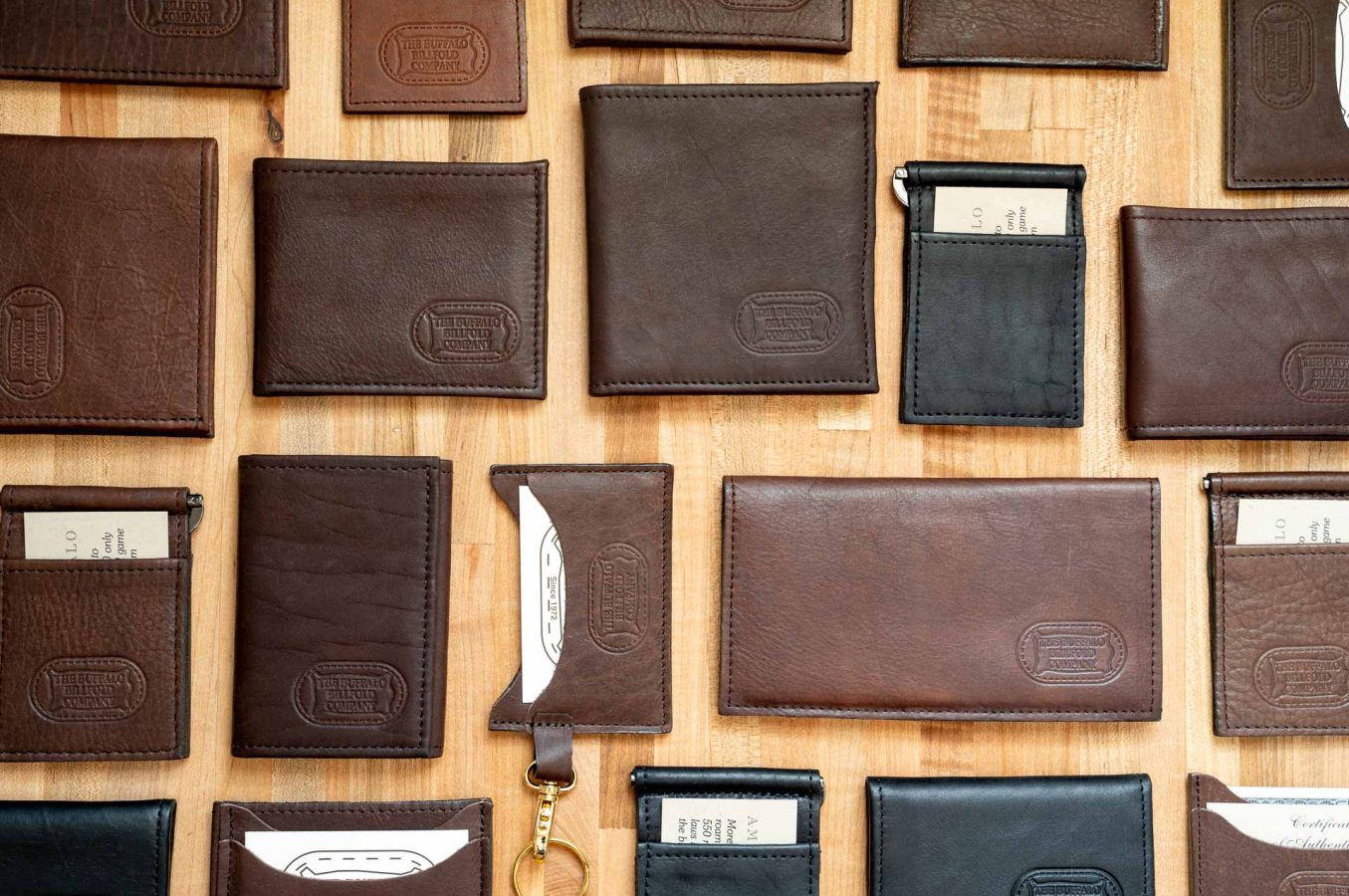
| Wallet type | Idéal pour | Key production detail |
|---|---|---|
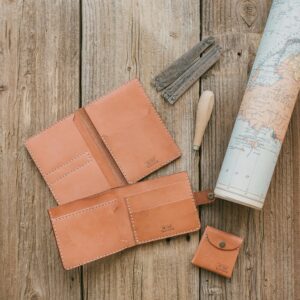
| Bifold wallet | Classic men’s and unisex collections | Balanced folding thickness and clean card slots |
| Trifold wallet | More storage in a compact shape | Precise folding allowance to prevent bulk |
| Card holder | Minimalist accessories and corporate gifts | Firm slot tension and neat edge finishing |
| Zip wallet | Women’s accessories and travel use | Fermeture éclair lisse, reinforced corners, lining durability |
| Long wallet | Premium fashion and gift collections | Large panels, straight stitching, stable inner layout |
| RFID wallet | Travel, tech, and security-focused brands | RFID lining placement and compliance testing |
If you are launching a first wallet line, start with two or three silhouettes instead of too many SKUs. A bifold, card holder, and zip wallet can cover a wide customer range while keeping sampling and inventory easier to control.
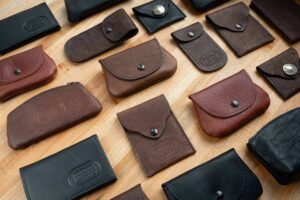
Matériels: cuir véritable, Microfibre, and Lining Choices
The material decision affects cost, hand feel, durabilité, et positionnement de la marque. Full grain or top grain leather is suitable for premium wallets because it ages well and communicates quality. Split leather can reduce cost, but it may not offer the same long-term surface performance. Microfiber leather is useful when a brand wants a smooth, consistent, animal-free alternative or a more controlled color range.
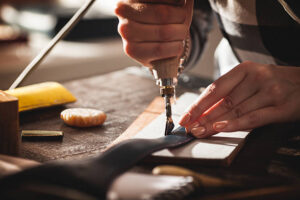
For wallets, leather thickness is especially important. A material that works well for a tote bag may be too heavy for card slots. Many wallet panels need to be skived, which means thinning the leather at fold lines and edges so the finished wallet closes neatly. A capable OEM leather wallet factory should recommend suitable thickness ranges for the outer shell, inner panels, and reinforcement layers.
If you are still comparing leather and synthetic alternatives, review our guide on cuir véritable vs microfibre pour sacs à main. The same decision logic applies to wallets, although wallets usually need thinner and more controlled material performance.
Logo Options for Custom Leather Wallets
Branding is one of the main reasons companies choose private label leather wallets. The logo method should match your price point and design language.
- Blind embossing: subtle, premium, and ideal for minimalist leather wallets.
- Debossing with foil: good for gift sets, fashion collections, and visible brand identity.
- Metal logo plate: suitable for luxury positioning but requires hardware color control.
- Heat transfer logo: useful for some microfiber or synthetic materials.
- Printed logo: flexible for promotional wallets, but should be tested for abrasion resistance.
Ask the manufacturer to test the logo on the actual production material, not only on a random leather scrap. Leather grain, oil content, and thickness can change the final result. If logo placement is a priority, you may also find our article on custom logo placement techniques useful.
MOQ and Sampling: What Brands Should Expect
MOQ depends on material availability, couleur, méthode de logo, conditionnement, and production complexity. A simple card holder in available leather may support a lower MOQ than a fully custom zip wallet with special lining, tirette de fermeture éclair personnalisée, branded gift box, and multiple colorways.
For startups, it is better to ask about the MOQ by material and color instead of asking only for one general number. Par exemple, the factory may allow a smaller order if you choose stock leather colors, but require a higher MOQ for custom-dyed leather or custom hardware.
A practical sampling process usually includes these steps:
- Share design references, prix indicatif, taille, préférence en cuir, méthode de logo, and packaging idea.
- Confirm wallet structure, card-slot quantity, closure type, and internal layout.
- Approve material swatches and logo tests before making the full prototype.
- Review the sample for size, folding thickness, card-slot tension, piqûre, peinture de bord, and logo quality.
- Revise the technical details before bulk production begins.
If low order quantity is important for your launch, read our low MOQ leather bag manufacturer guide. The MOQ logic is similar for wallets, especially when material and logo processes are shared across a collection.
Quality Control Points for Leather Wallet Production
Wallet quality is judged by touch, symmetry, and daily usability. Pendant la production, your custom leather wallet manufacturer should inspect both appearance and function.
- Leather consistency: couleur, grain, thickness, and surface marks should match the approved sample.
- Cutting accuracy: panels must align cleanly, especially around fold lines and corners.
- Card-slot tension: slots should hold cards securely without being too tight.
- Piqûre: stitch length, thread color, and corner turns should be consistent.
- Edge paint: edges should be smooth, sealed, and resistant to cracking.
- Logo finish: embossing depth, foil transfer, and placement should match the approved standard.
- Folding shape: the wallet should close naturally without warping or excessive bulk.
- Conditionnement: sacs à poussière, boîtes, tissue paper, and barcode labels should follow brand requirements.
Pour les commandes groupées, ask for in-line inspection and final random inspection. You can also request photos or short videos during production, especially for first-time orders.
How Much Do Custom Leather Wallets Cost?
Wallet pricing varies by material, design complexity, order quantity, méthode de logo, conditionnement, and inspection requirements. A card holder usually costs less than a long zip wallet because it uses fewer components and less labor. Cuir de première qualité, RFID lining, custom hardware, or gift-box packaging will increase the unit cost.
When comparing quotations, do not look only at the lowest price. Check whether the quote includes sample cost, logo mold cost, conditionnement, export carton, inspection de la qualité, and shipping terms. A low unit price can become expensive if key items are excluded.
A good manufacturer should help you value-engineer the design. Par exemple, using stock leather in a premium color, simplifying the inner slot structure, or using blind embossing instead of a custom metal plate can reduce cost while keeping the wallet aligned with your brand positioning.
How to Choose an OEM Leather Wallet Factory
The best OEM leather wallet factory for your brand should be able to show relevant samples, explain technical tradeoffs, and communicate clearly before production. Use the checklist below before placing an order.
- Does the factory have experience with wallets, titulaires de cartes, and small leather goods?
- Can it support OEM and ODM development, not only copy an existing sample?
- Can it recommend leather thickness, garniture, reinforcement, and edge finishing?
- Does it offer logo testing before sample approval?
- Can it work with your target MOQ and launch timeline?
- Does it provide clear quotation details and production schedule?
- Can it inspect card-slot tension, folding shape, peinture de bord, et emballage?
- Does it understand export requirements for your market?
Hongbang Leathers supports OEM and ODM development for leather bags, portefeuilles, et accessoires. Our team works with global brands on material selection, développement d'échantillons, personnalisation du logo, and production control. If you want to build a coordinated collection, you can combine wallets with handbags, sacs fourre-tout, sacs à dos, or leather accessories for a stronger retail offer.
FAQ About Custom Leather Wallet Manufacturing
What is the best leather for custom wallets?
Top grain leather and full grain leather are common choices for premium custom wallets because they offer good hand feel, durabilité, and natural character. Microfiber leather can also be a good option for brands that need consistent color, vegan positioning, or controlled cost.
Can I add my logo to leather wallets?
Oui. Common logo options include blind embossing, foil debossing, plaques logo en métal, heat transfer, and printing. The best method depends on your material, design style, et le prix.
What is the MOQ for private label leather wallets?
MOQ dépend du matériel, couleur, méthode de logo, et emballage. Stock leather and standard hardware usually allow more flexible MOQ, while custom colors, custom hardware, and gift packaging may require higher quantities.
Combien de temps prend l'échantillonnage du portefeuille?
Sampling time depends on design complexity and material availability. A simple wallet sample is usually faster than a custom zip wallet with special lining, logo mold, and branded packaging.
Can a leather bag factory also make wallets?
Many leather bag factories can make wallets, but not all of them specialize in small leather goods. Wallets require tighter tolerances, thinner leather preparation, precise card slots, and careful edge finishing.
Conclusion
Choisir le bon custom leather wallet manufacturer helps your brand avoid common problems such as bulky folds, weak edge paint, poor logo results, and inconsistent card slots. A reliable factory should guide you through material selection, échantillonnage, MOQ planning, logo testing, contrôle de qualité, et emballage.
If you are developing private label leather wallets or a matching accessory line, contact Hongbang Leathers to discuss your design, prix indicatif, direction matérielle, and launch schedule.
Buyer trust signals to confirm before ordering
When comparing a custom leather wallet manufacturer, buyers usually care about three practical details: whether card slots stay tight after use, whether the wallet stays slim when filled, and whether the logo finish still looks clean after repeated handling. Ask for a sample with the exact leather, garniture, fil, peinture de bord, and logo method before confirming bulk production.
For private label wallets, it also helps to request simple function checks: card insertion, cash compartment depth, snap or zipper movement, folded thickness, color rubbing, and edge paint adhesion. These checks make the article more useful for real sourcing teams, not only search engines.
External standards and useful references
For leather naming and material claims in the U.S. marché, review the FTC leather and imitation leather guides. If your wallet packaging needs retail barcodes, le GS1 barcode standards are a helpful reference.
Related HongBang reading: how to choose a custom leather bag manufacturer et best materials for leather bags.
Related HongBang service: If you are planning a branded wallet line, see our custom leather wallet manufacturing service for OEM/ODM options, détails du logo, sampling and production support.