A vegan leather bag manufacturer helps brands develop bags without animal-derived leather while still meeting expectations for style, duurzaamheid, kosten, and retail presentation. As more customers compare sustainability, price, and material ethics, vegan leather bags have become an important category for fashion, travel, en lifestylemerken.
Echter, vegan leather sourcing needs careful planning. Not every non-leather material performs the same way. Some materials look smooth but scratch easily. Some are affordable but not suitable for premium positioning. Some support strong sustainability messaging, while others require more careful wording to avoid overclaiming.
This guide explains how private label brands can choose vegan leather materials, work with an OEM factory, test durability, plan MOQ, and build a responsible vegan bag collection.
What Vegan Leather Bag Manufacturing Includes
Vegan leather bag manufacturing means producing bags with materials that are not made from animal leather. These materials may include microfiber leather, PU synthetic leather, recycled synthetic materials, bio-based alternatives, coated textiles, or mixed-material constructions.
A capable manufacturer should help your brand select materials based on product type, target price, durability requirements, color range, logo method, and market positioning. The goal is not only to replace leather, but to create a bag that works well for real customers.
Common Vegan Leather Material Options
| Materiaal | Beste voor | Key consideration |
|---|---|---|
| Microfiber leather | Premium vegan handbags and structured bags | Good consistency, smooth surface, strong durability when selected well |
| PU synthetic leather | Fashion bags and cost-controlled collections | Wide color range, but quality varies by grade |
| Recycled synthetic material | Sustainability-focused brands | Requires clear documentation and realistic claims |
| Coated textile | Lightweight casual bags | Good for specific styles, but may not feel like leather |
| Bio-based alternatives | Emerging eco collections | Beschikbaarheid, MOQ, and performance must be checked carefully |
For many private label brands, microfiber leather is a practical starting point because it can offer a clean appearance, consistent color, and good manufacturing control. If you want a deeper material comparison, read our guide on echt leer versus microvezel voor handtassen.
Match Vegan Material to Bag Type
The best material depends on the bag structure. A soft shoulder bag needs drape and flexibility. A structured tote needs panel stability. A crossbody bag needs abrasion resistance around corners and strap areas. A backpack needs stronger reinforcement at stress points.
Do not choose a vegan material only by surface appearance. Ask your manufacturer how it behaves during cutting, stiksels, folding, edge finishing, logo embossing, and daily use. A material that looks good in a swatch may not perform well as a finished bag.
Durability Tests Brands Should Request
Durability is one of the biggest concerns for vegan leather bags. Before approving bulk production, ask for basic performance checks based on your market and price point.
- Surface abrasion resistance
- Color fastness and rubbing test
- Flexing and folding resistance
- Peeling or delamination check
- Edge cracking observation
- Strap and handle pull strength
- Zipper and hardware function
- Logo adhesion or embossing clarity
For premium vegan bags, material testing should happen before the final sample is approved. This helps avoid expensive quality problems after bulk production.
Logo and Branding for Vegan Leather Bags
Logo methods for vegan leather bags may include embossing, inscriptie, heat transfer, afdrukken, woven labels, metal plates, and custom zipper pullers. The best option depends on the material surface and brand style.
Microfiber leather may support clean embossing, while some PU materials may perform better with heat transfer or metal logo plates. Always request a logo test on the actual production material. If your brand uses sustainability messaging, keep the logo and packaging aligned with that positioning.
MOQ and Cost Planning
MOQ depends on material availability, kleur, hardware, voering, logo method, en verpakking. Some vegan materials are available in stock colors, while others require higher MOQ for custom colors or special finishes.
To control cost, start with a focused product range. A tote, crossbody bag, and wallet can create a complete vegan accessory launch without too many SKUs. Shared material colors and shared hardware can reduce complexity and improve production efficiency.
If your brand needs a smaller first run, ask whether the factory can use available material colors and standard hardware. This may allow more flexible MOQ than fully custom material development.
Be Careful With Sustainability Claims
Vegan does not automatically mean sustainable. Some vegan leather materials are chosen for animal-free positioning, while others may also include recycled or bio-based content. Brands should describe materials accurately and request documentation when making specific claims.
Bijvoorbeeld, if you say a bag uses recycled material, confirm the percentage and available proof. If you say bio-based, confirm what part of the material is bio-based. Clear wording protects your brand and builds customer trust.
Quality Control Checklist for Vegan Bag Production
- Material surface consistency and color matching
- Cutting accuracy and panel shape
- Stitching and seam strength
- Edge finishing and corner durability
- Logo clarity and placement
- Hardware color and zipper movement
- Lining quality and pocket construction
- Strap reinforcement and handle strength
- Verpakking, etiketten, and material cards
Because vegan materials vary widely, keep an approved material swatch and approved sample for every production run. This helps the manufacturer maintain consistency across reorders.
How to Choose a Vegan Leather Bag Manufacturer
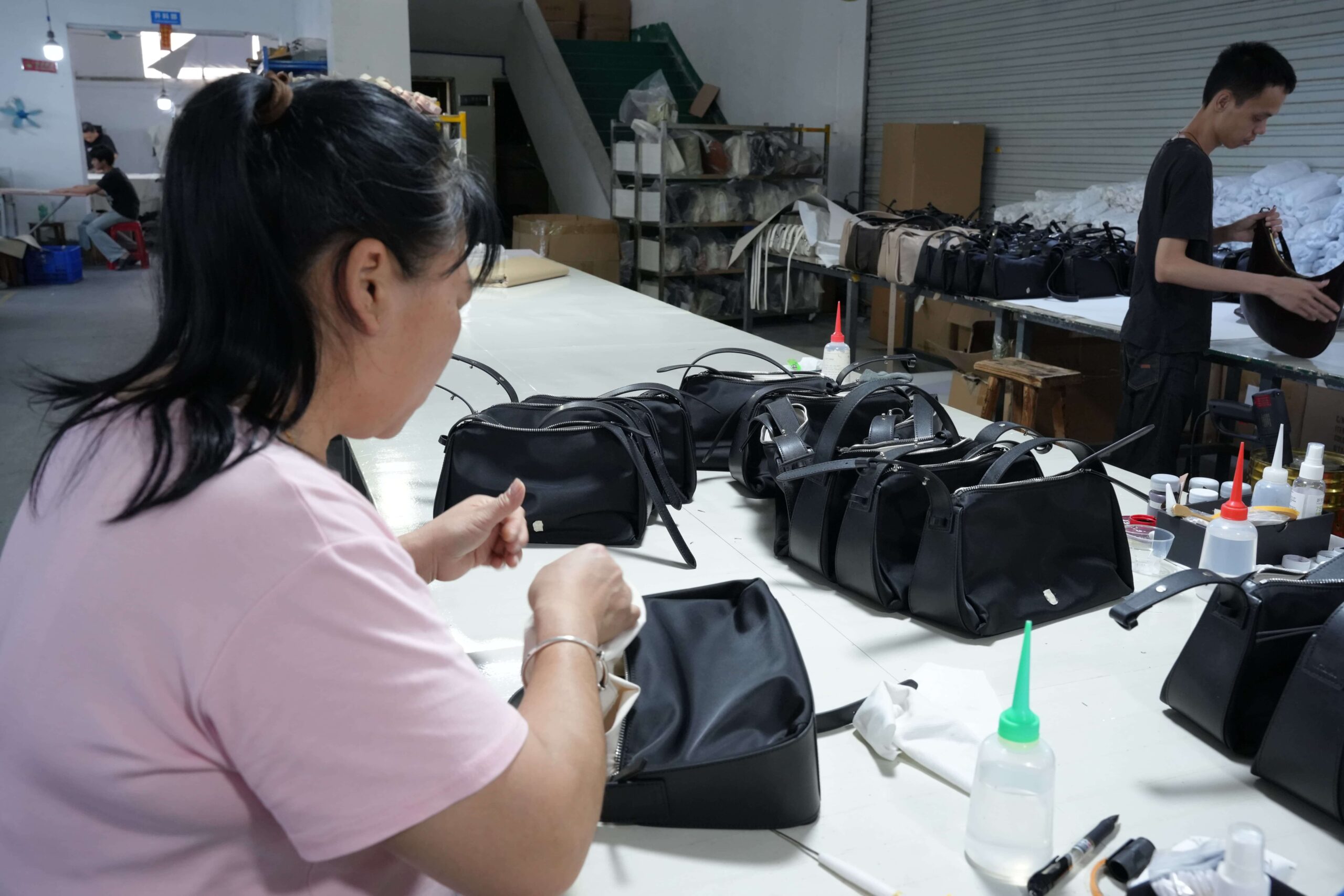
A reliable vegan leather bag manufacturer should understand both material performance and bag construction. Ask about material sourcing, sample experience, logo testing, durability checks, MOQ, verpakking, and export experience.
The factory should also be honest about tradeoffs. Some vegan materials are better for structured bags, while others work better for soft fashion styles. Clear guidance during development is more valuable than a factory that says every material can do everything.
Hongbang Leathers supports OEM and ODM production for leather, microvezel, and vegan-material bags. Our team can help brands compare materials, develop samples, test logos, plan packaging, and manage production quality.
FAQ About Vegan Leather Bag Manufacturing
What is the best vegan leather for handbags?
Microfiber leather is often a strong option for premium vegan handbags because it offers a smooth surface, consistent color, and good durability when selected correctly. PU and recycled synthetic materials can also work depending on the product and target price.
Can vegan leather bags be customized with logos?
Ja. Logo options may include embossing, heat transfer, afdrukken, woven labels, metal plates, and custom zipper pullers. The method should be tested on the actual material.
Is vegan leather always more sustainable?
Nee. Vegan means animal-free, but sustainability depends on material composition, sourcing, productie, duurzaamheid, and documentation. Brands should make accurate claims based on the actual material used.
Can I produce vegan bags with low MOQ?
It depends on material availability and customization requirements. Stock colors and standard hardware usually allow more flexible MOQ than custom material development.
Conclusie
Choosing the right vegan leather bag manufacturer helps your brand create animal-free bags that still meet expectations for style, duurzaamheid, and quality. Focus on material selection, performance testing, logo method, MOQ planning, clear claims, and careful inspection.
If you are developing vegan handbags, bakken, crossbody tassen, rugzakken, or wallets, contact Hongbang Leathers to discuss materials, samples, logo options, verpakking, and OEM production.
How buyers evaluate vegan leather bags
When choosing a vegan leather bag manufacturer, buyers usually compare surface feel, peeling resistance, odor, color fastness, flexibiliteit, abrasion resistance, and whether the material supports the brand story. A vegan claim should be clear and responsible; the product still needs durability, good construction, and attractive finishing.
Ask for material swatches, available test reports, and an aging or rubbing check before sampling. Vegan leather can look very different after bending, stiksels, edge finishing, and packing, so a finished sample is more reliable than a flat swatch alone.
Authority references for material claims
For leather and imitation leather wording, review the FTC leather guides. For chemical safety programs that may apply to leather and related materials, see the OEKO-TEX Leather Standard.
Related HongBang reading: genuine leather vs microfiber En best materials for leather bags.